
🦒 Why World Giraffe Day?
June 21 — The Longest Day for the Tallest Animal
World Giraffe Day is celebrated annually on June 21st — the longest day (or night) of the year, depending on the hemisphere. This date was intentionally chosen to match the tallest animal on Earth with the longest day of the year in the Northern Hemisphere (summer solstice).
Initiated by the Giraffe Conservation Foundation (GCF), this annual event aims to raise awareness, shed light on the challenges giraffes face in the wild, and celebrate these gentle giants that have roamed the African savanna for millions of years.
When?
June 21st every year — the summer solstice in the Northern Hemisphere
Why This Date?
The longest day of the year celebrates the tallest animal — a poetic match by the GCF
Purpose
Raise awareness about declining populations & support conservation initiatives worldwide
Why Giraffes Matter to Ecosystems
Giraffes are far more than a tourist attraction — they are keystone browsers that play a vital role in maintaining the ecological balance of African savannas and woodlands.
- Seed Dispersal: Giraffes consume fruits, seeds, and pods from treetops, spreading seeds across vast distances through their dung — promoting forest regeneration.
- Tree Pruning: By browsing the high canopy, giraffes naturally prune trees, stimulating new growth and allowing sunlight to reach the understory.
- Predator Sentinels: Their height gives them an unmatched vantage point. Other animals like zebras and wildebeest often graze near giraffes, using them as early-warning lookouts for predators.
- Nutrient Cycling: Their large-scale foliage consumption and excretion return vital nutrients to the soil, enriching the savanna ecosystem.
- Biodiversity Indicators: Healthy giraffe populations signal well-managed habitats. Their decline warns of broader ecosystem degradation.
🌍 Meet the Giraffe
The 24-Million-Year Masterpiece
For over a century, science operated under a single assumption regarding the world's tallest terrestrial animal: there was only one species of giraffe, divided into several regional subspecies. This monolithic view remained unchallenged in textbooks around the globe.
However, in 2016, genetic data revealed a biological earthquake — a reality formally adopted by the International Union for Conservation of Nature (IUCN) in August 2025. There is not one species of giraffe, but four distinct species, possessing genetic differences as vast and profound as those between polar bears and brown bears.
Today, fewer than 140,000 giraffes remain in the wild. To understand them requires looking past their height and examining a 24-million-year evolutionary journey marked by massive climate shifts, anatomical anomalies, and two highly distinct biological "boosts."
🌟 Biological Marvels
Biological Marvels: Amazing Adaptations
Evolution sculpted the giraffe into a marvel of engineering. Click a card to explore each adaptation.
The Extraordinary Neck
2.4 m longThe Extraordinary Neck
- Same 7 vertebrae as humans
- Each bone over 25 cm long
- Rivals any other herbivore for food access
- Used as a weapon in 'necking' combat
The 11 kg Heart
11 kg weightThe 11 kg Heart
- Twice human blood pressure
- Pumps blood nearly 2 m upward
- 60 cm in diameter
- Beats ~65 times per minute
The 50 cm Tongue
50 cm lengthThe 50 cm Tongue
- Dark blue-black pigmentation
- Blocks UV radiation in open sun
- Wraps around thorny acacia branches
- Prehensile — works like a hand
Unique Spot Patterns
No two alikeUnique Spot Patterns
- Individual as a fingerprint
- Acts as a thermal radiator
- Blood vessels release heat at patch edges
- Spot shape is species-specific
🐆 Coat Patterns
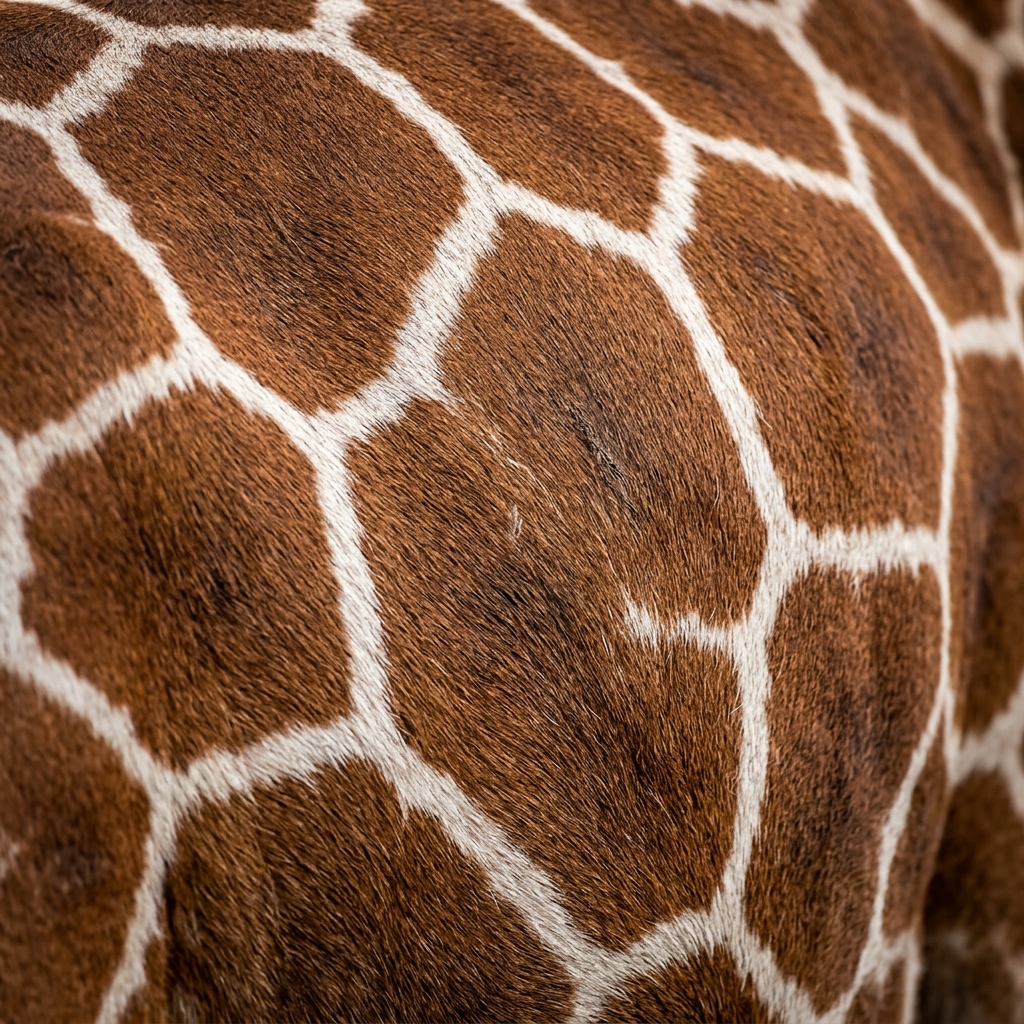
Unique Spot Patterns: An Interactive Guide
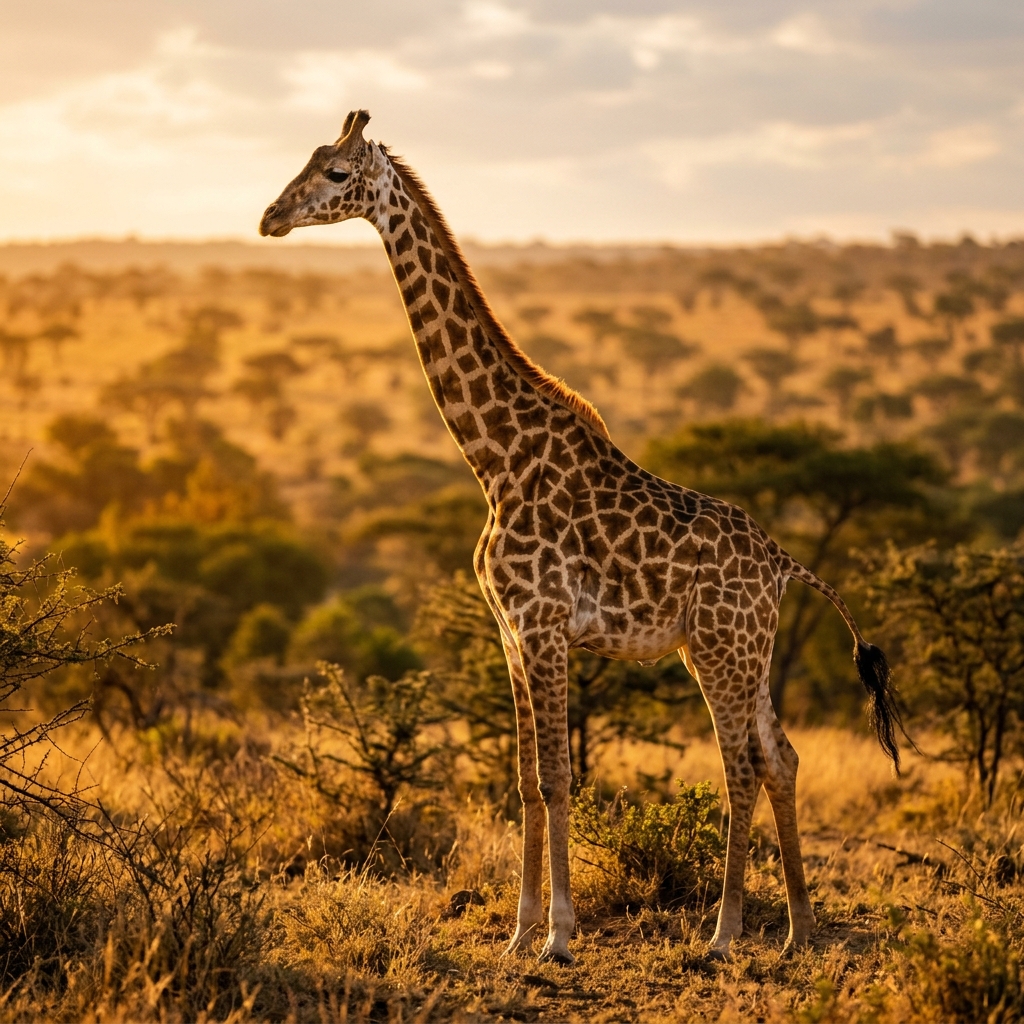
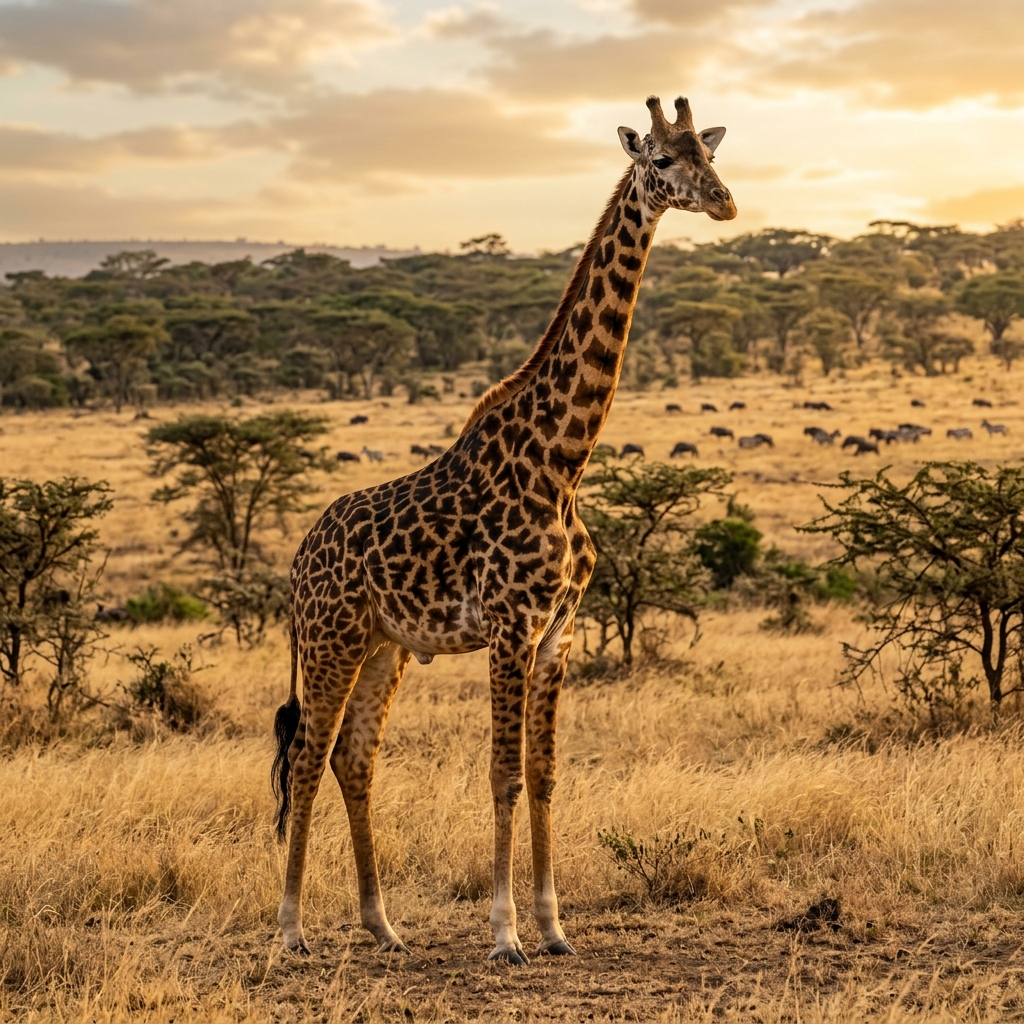
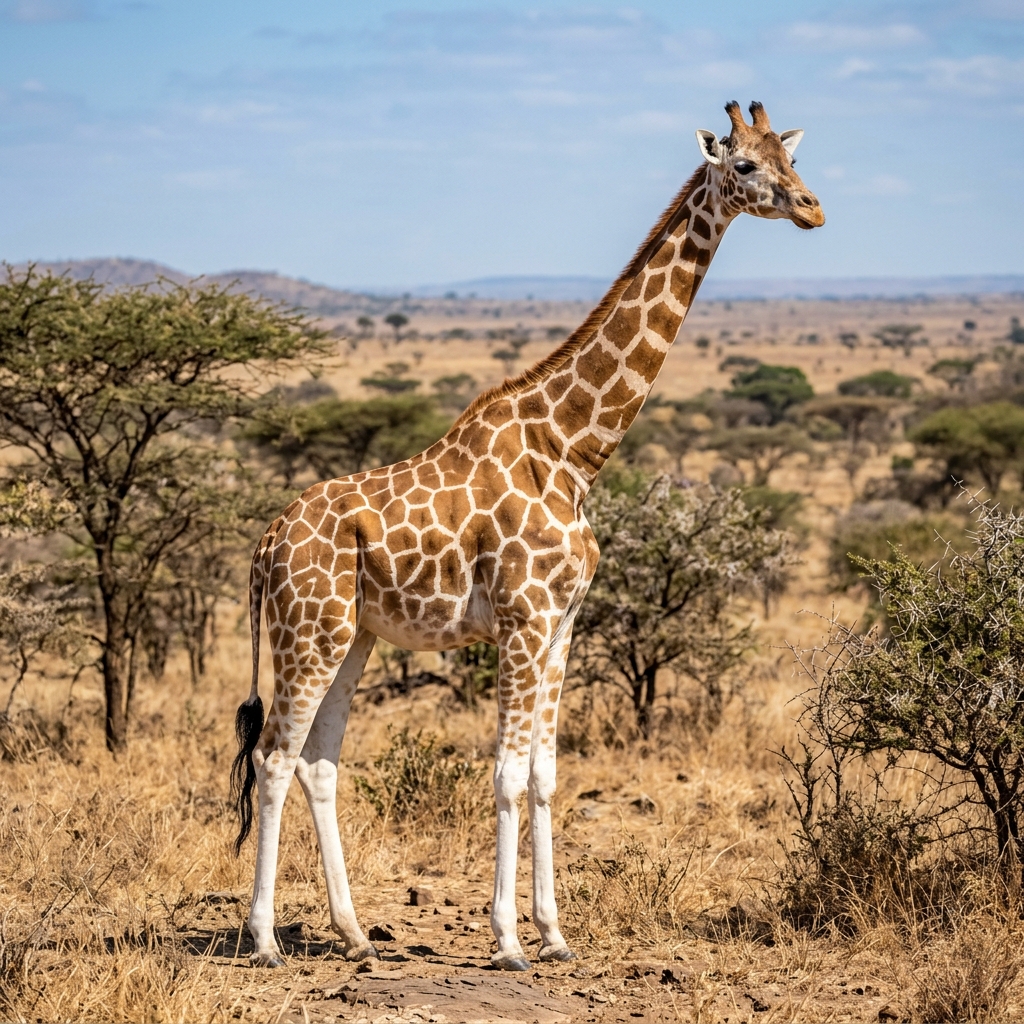
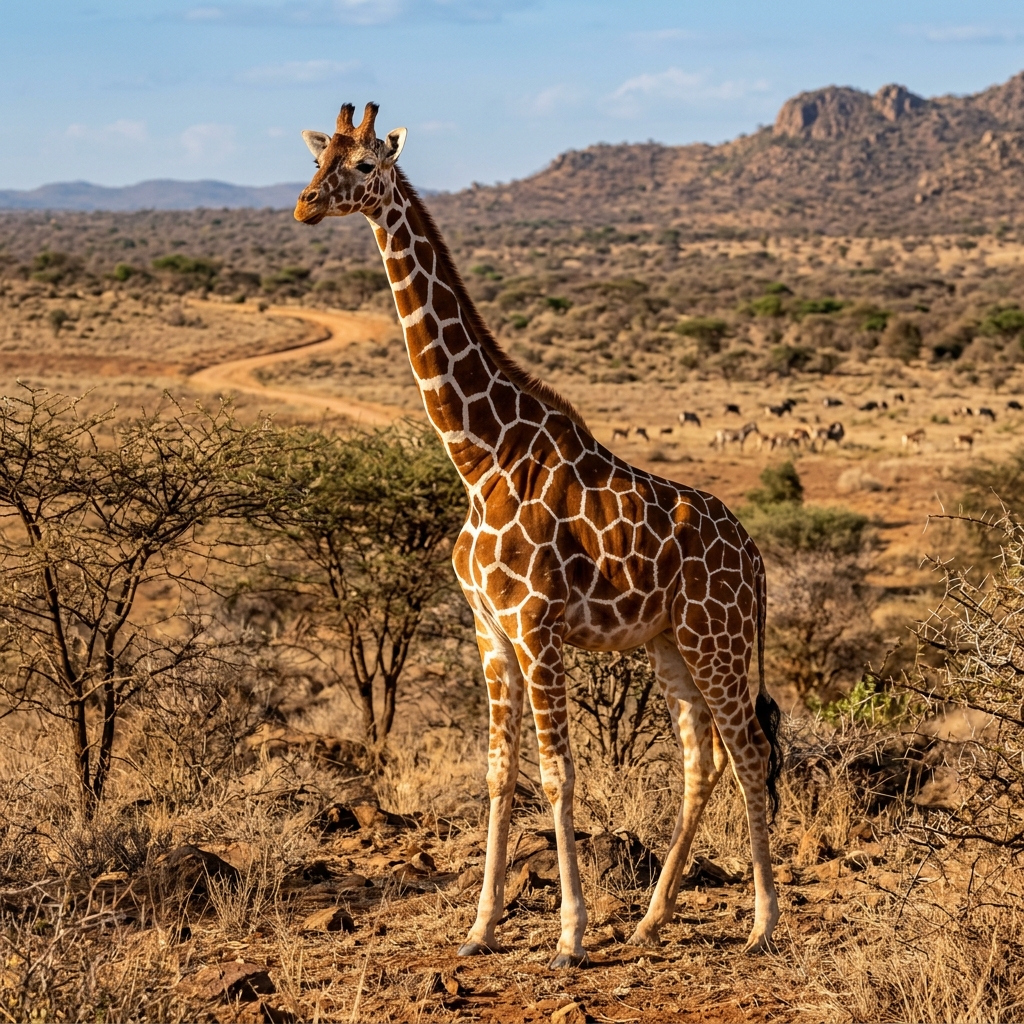
Just like a human fingerprint, no two giraffes have the exact same coat. However, the shape, color, and spacing of the spots are the primary visual indicators for distinguishing the four distinct species in the wild.
🔬 The Science Behind the Neck
The Science Behind the Neck
Why Necks Became Longer: Evolution is never a single story. The giraffe's neck emerged from the intersection of five powerful forces.
Reaching Higher Food
As African forests gave way to savanna, acacia trees became the primary food source. Only taller individuals could browse beyond the reach of every other herbivore.
Natural Selection
Each generation, longer-necked giraffes survived lean seasons better and reproduced more successfully. Across millions of years, this compounded into extraordinary elongation.
Climate Change
The drying of Africa 5–8 million years ago replaced dense forest with open savanna — creating both the ecological pressure and the opportunity for upward browsing.
Food Competition
As herbivore diversity exploded on the savanna, competition at ground level intensified dramatically. A taller browser had a monopoly on leaves no one else could reach.
Sexual Selection
Male giraffes use their necks as weapons in ritualized 'necking' combat. Longer-necked males win more fights, claim more mates, and pass their genes to more offspring.
🔄 Interactive Transformation
Interactive Transformation
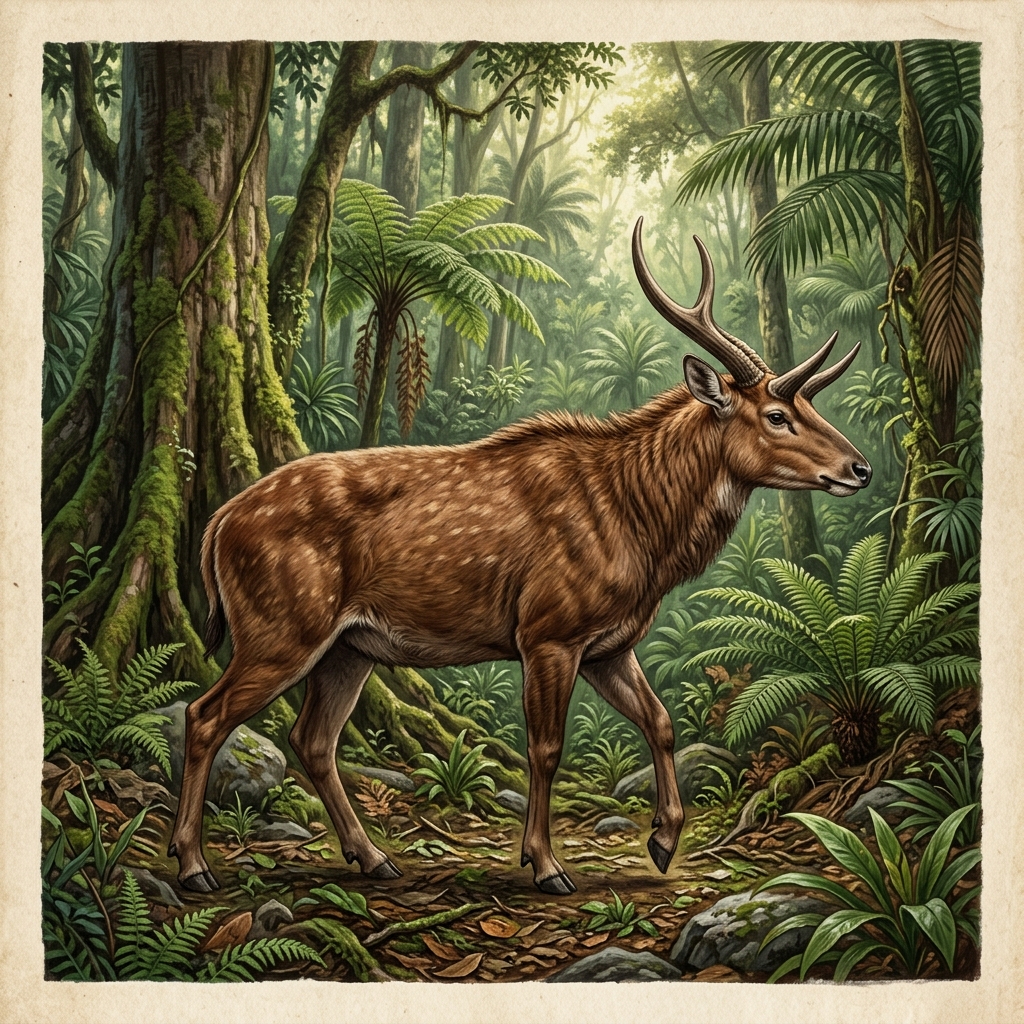
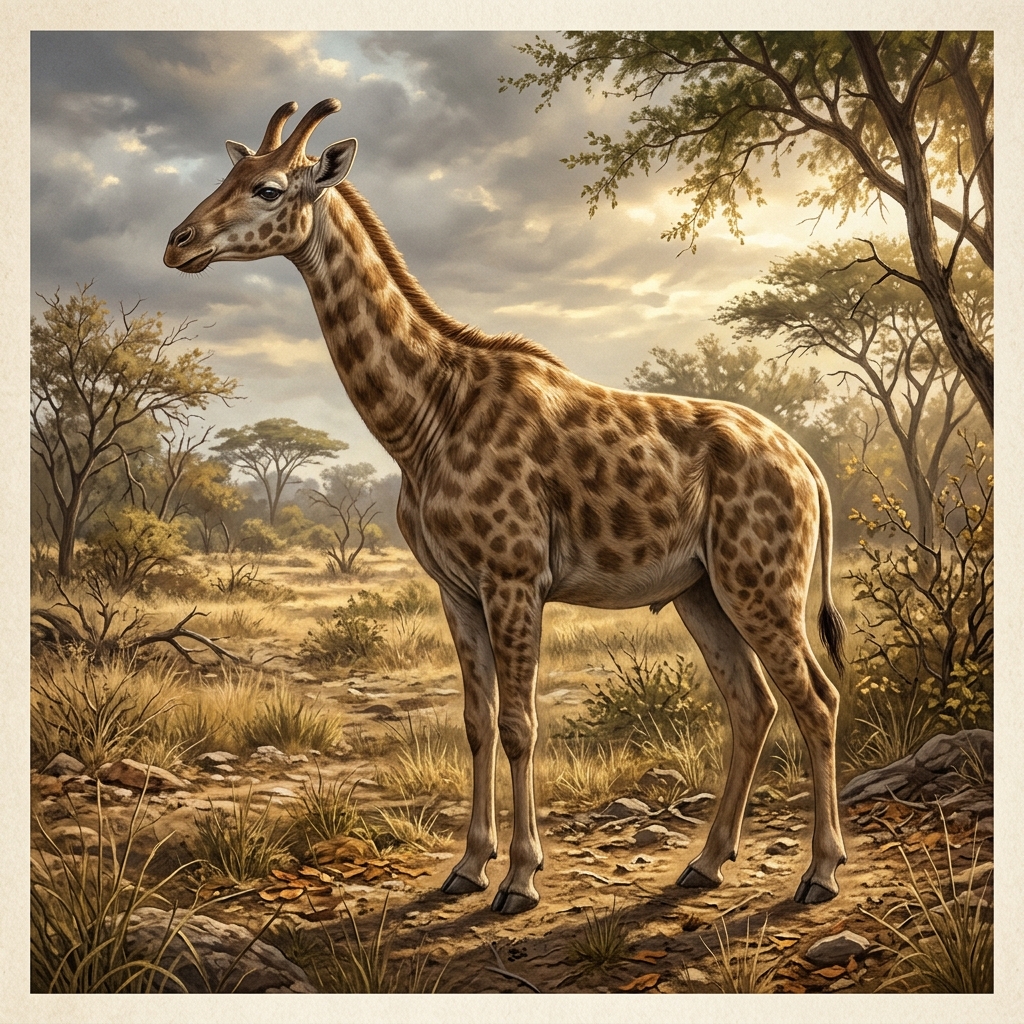
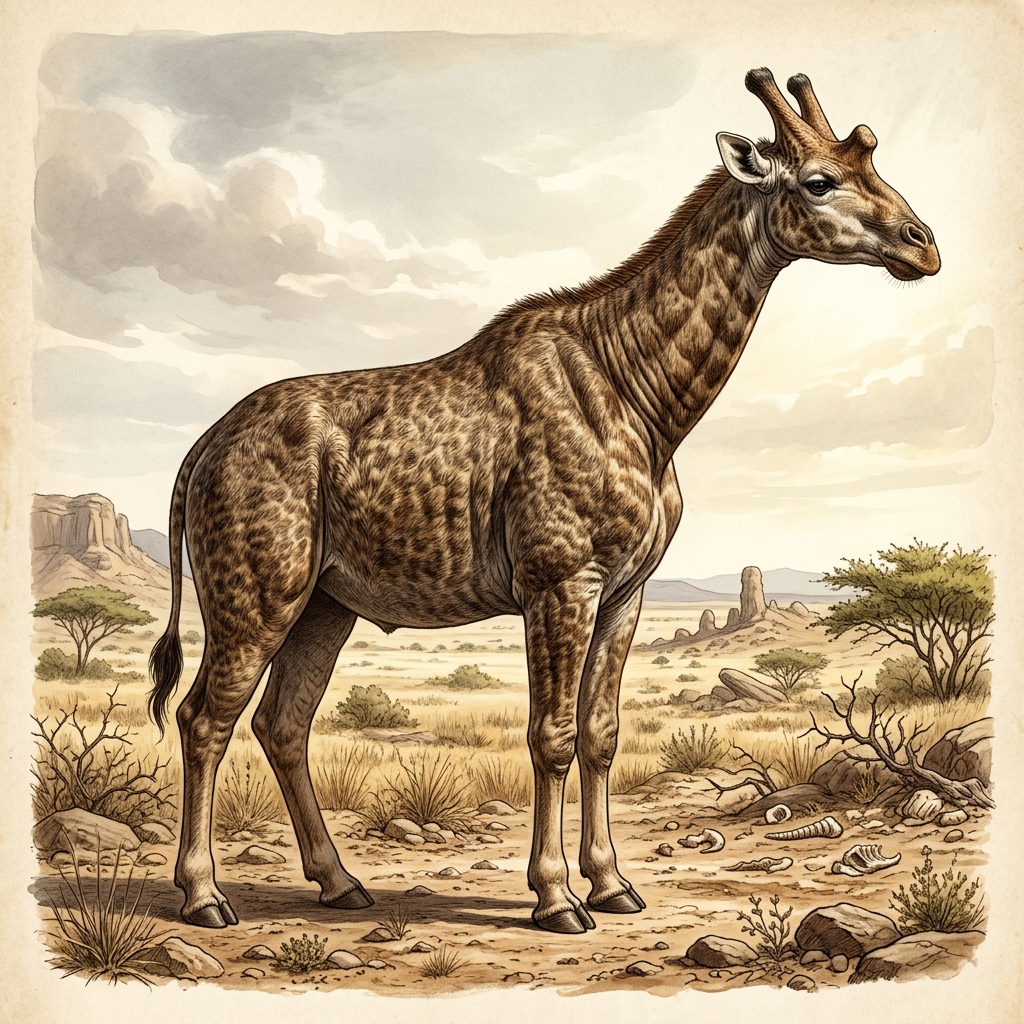
Follow the 25-million-year journey. Click the timeline stages below to witness how shifting ecosystems drove the most extreme anatomical transformation in mammalian history.
🏷️ Taxonomy — The 2025 Reclassification
The 2025 Reclassification
For over a century, science operated under a single assumption: there was only one species of giraffe. In 2016, genetic data revealed a biological earthquake — formally adopted by the IUCN in August 2025. There are four distinct species and five subspecies (the Reticulated Giraffe has no subspecies).
🌍 Living Diversity
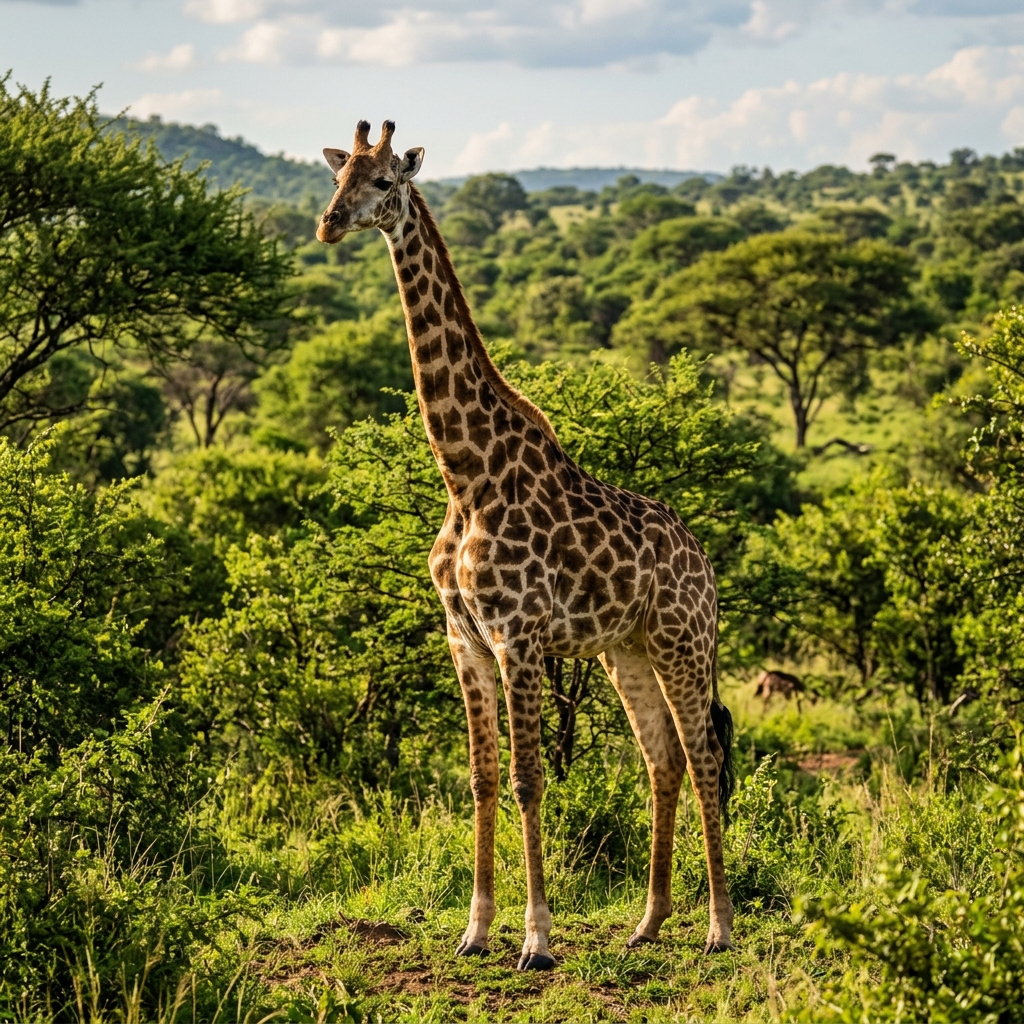
Living Diversity: The Four Living Species
Genomic science revealed what the eye long suspected — these are not one species, but four distinct lineages with unique identities.
🌿 The 24-Million-Year Ancestry
The 24-Million-Year Ancestry
The evolutionary path of the giraffe is not a straight line of necks progressively stretching toward the canopy. It is a complex web of environmental adaptations, branching lineages, and evolutionary dead-ends.
Palaeomerycidae (Ancestral Family)
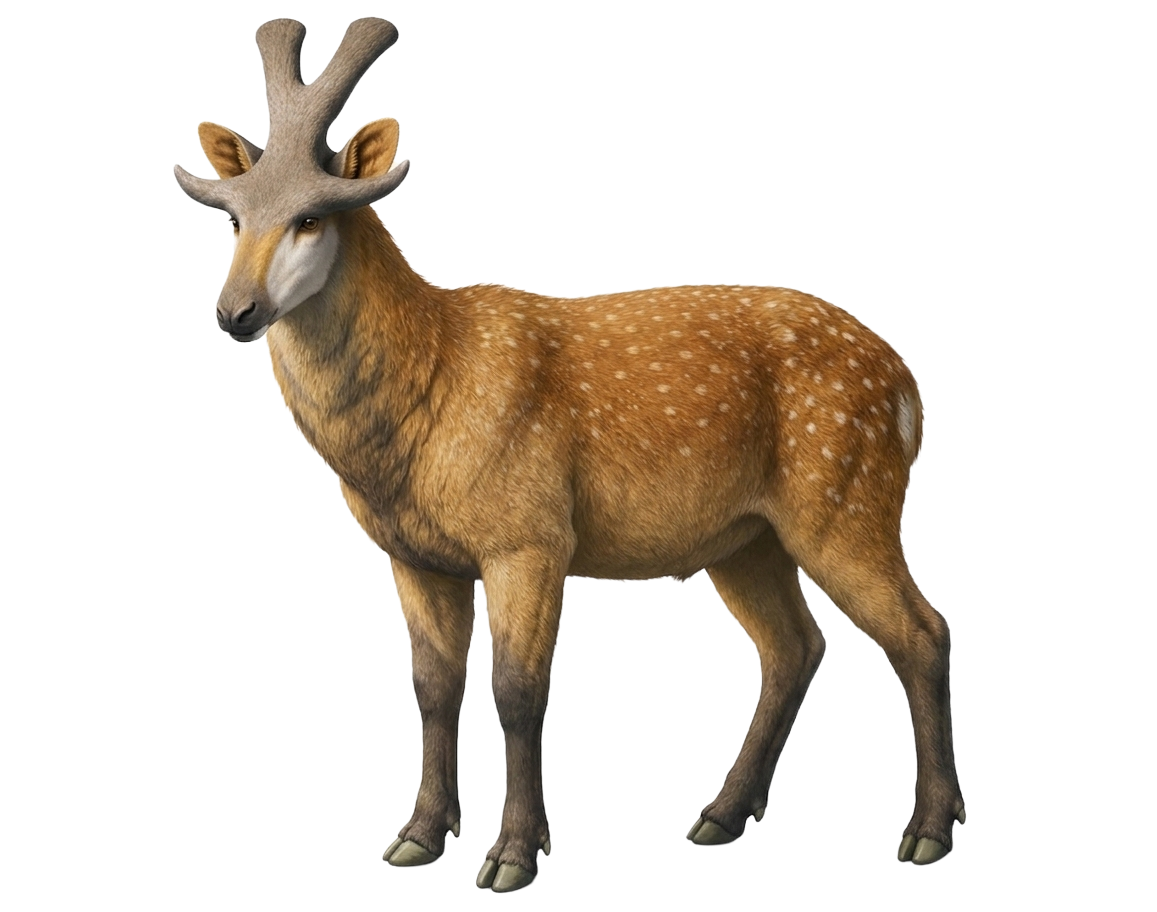
The base family from which all giraffids arose. They lived across Europe, Asia, and Africa, sharing the landscape with the ancestors of modern pronghorns. This is the earliest ancestor, arising from the gelocid ancestral assemblage.
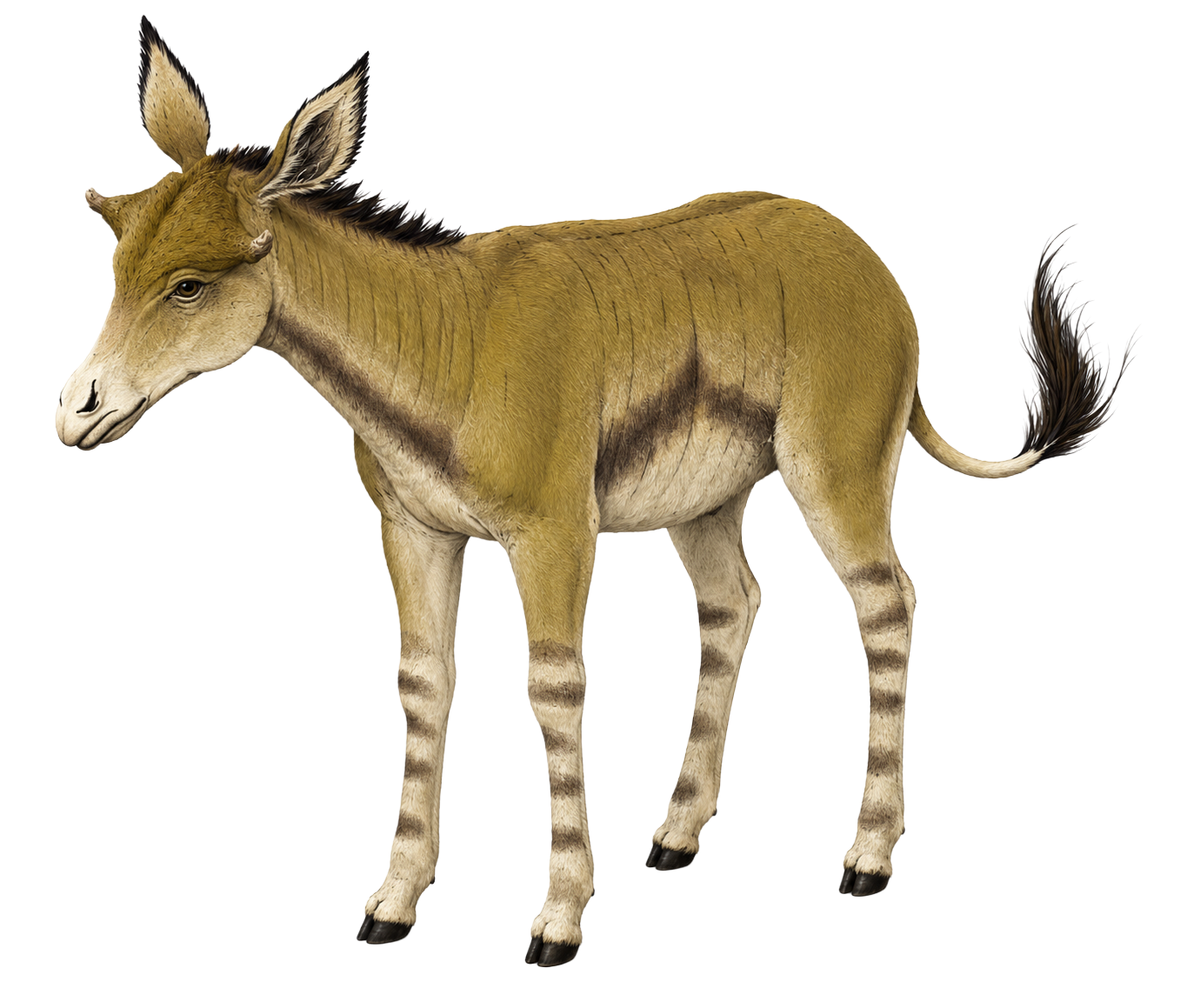
The earliest known true member of the giraffe family. Fossil evidence from Libya and Kenya shows the very first signs of neck vertebrae elongating compared to their width.
Canthumeryx (The First Giraffid)
Giraffokeryx (The Short-Neck Branch)
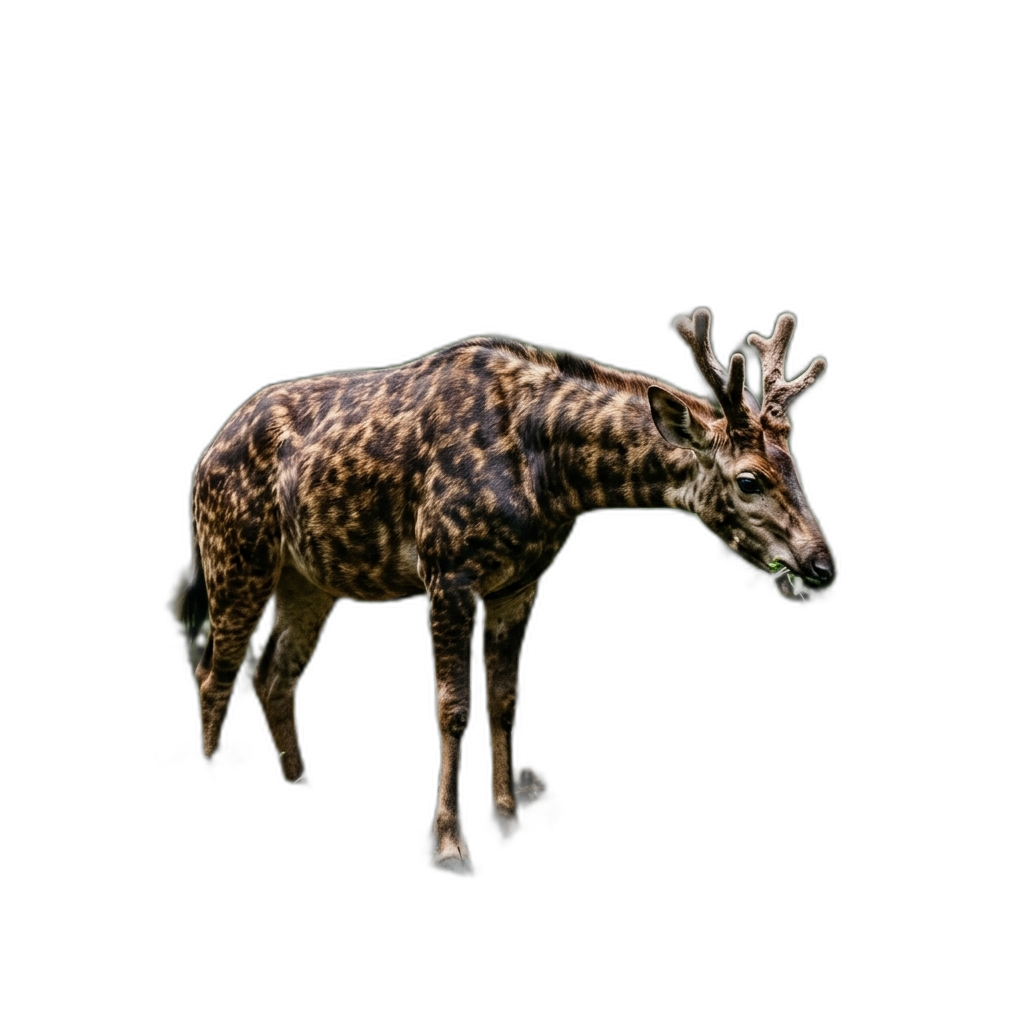
An intermediate offshoot that thrived on low vegetation in Eurasia. This branch represents lineages that reverted to short necks to graze on low shrubs.
A crucial transitional form with a neck roughly 1 meter long (half that of a modern giraffe). This species underwent the very first 'elongation boost' — the cranial end of the C3 vertebra stretched out.
Samotherium (The Transitional Link)
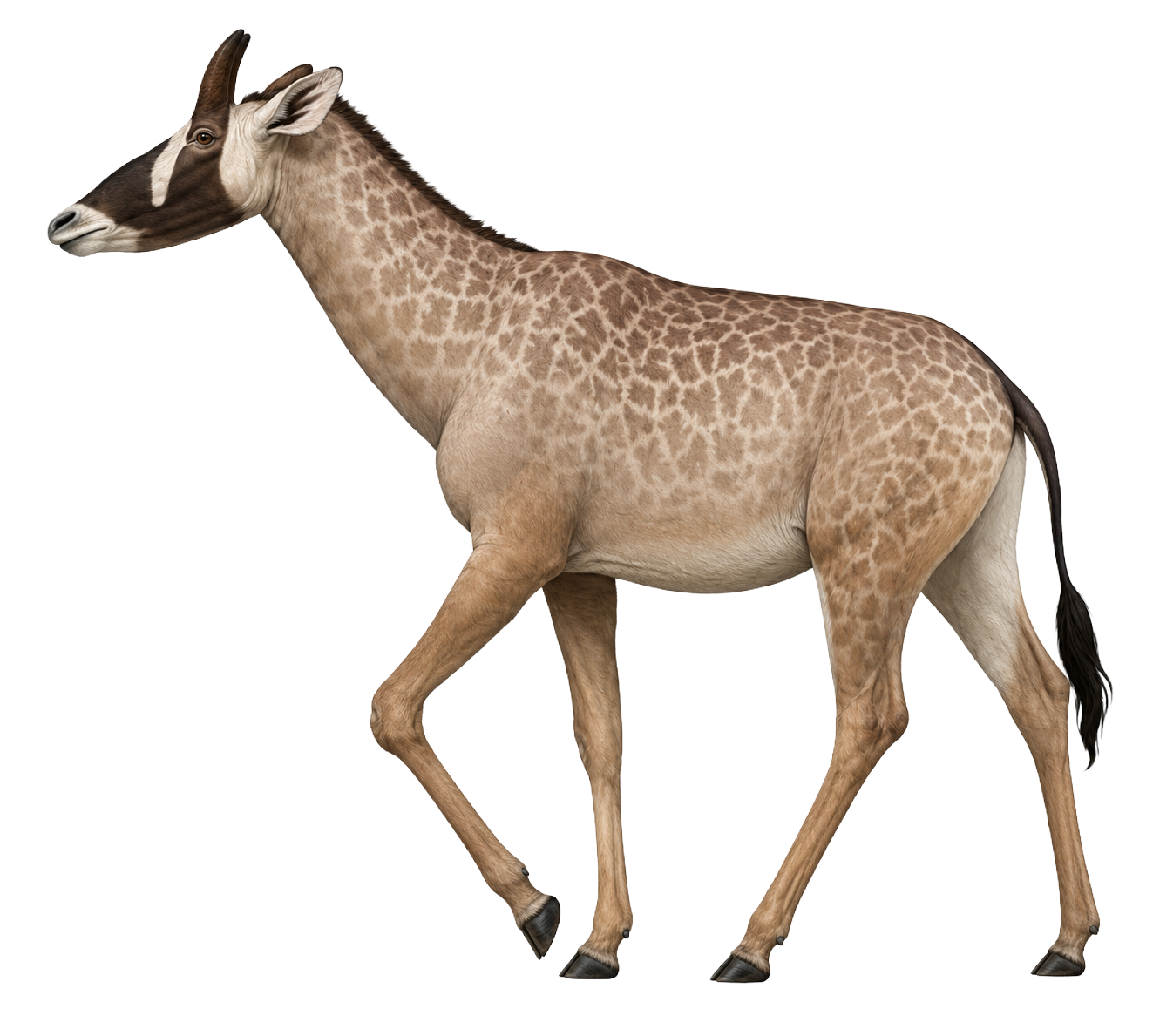
Bohlinia (The Direct Ancestor)
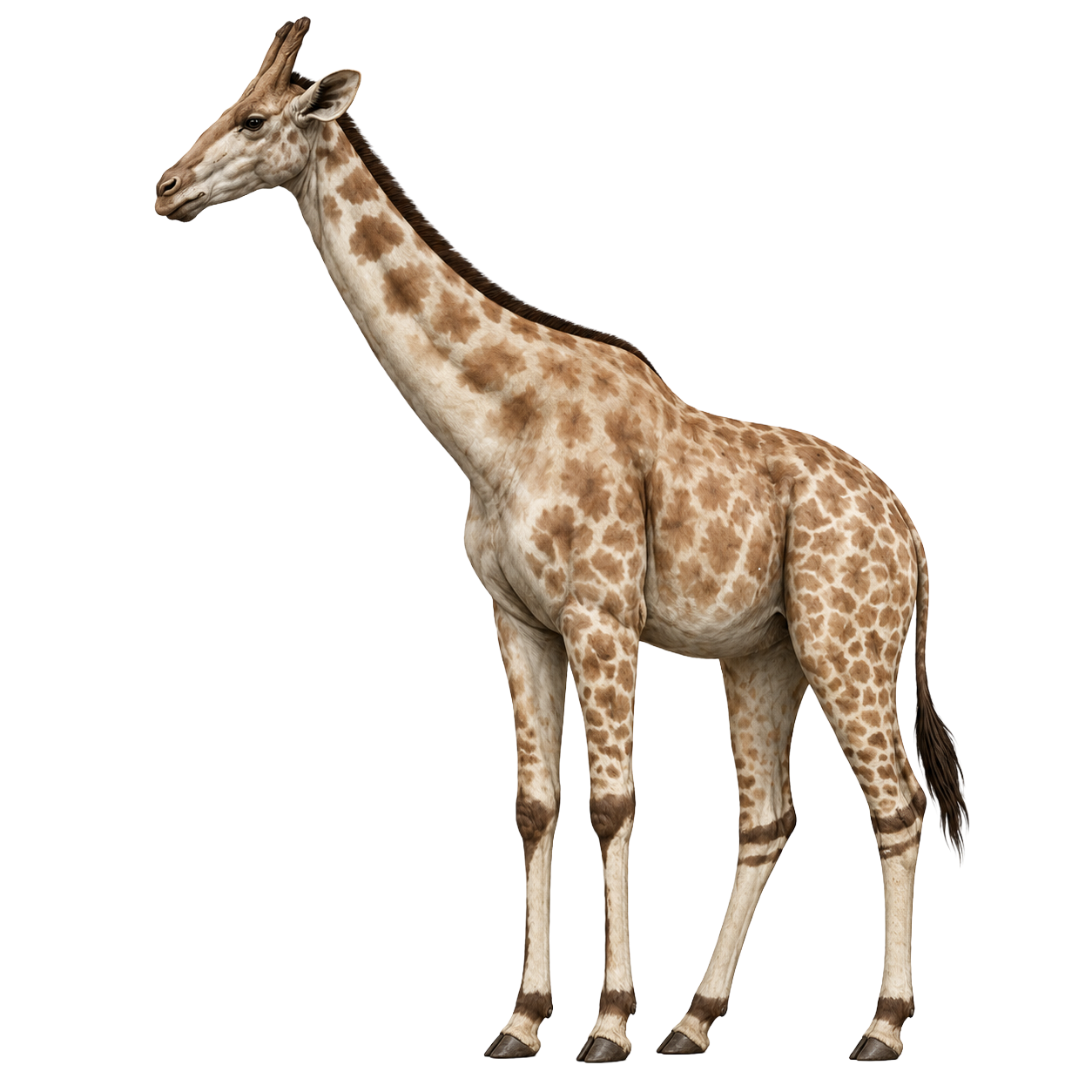
The terminal ancestor before modern giraffes. Roughly the same size as modern giraffes, their progeny migrated from Eurasia into Africa via Ethiopia.
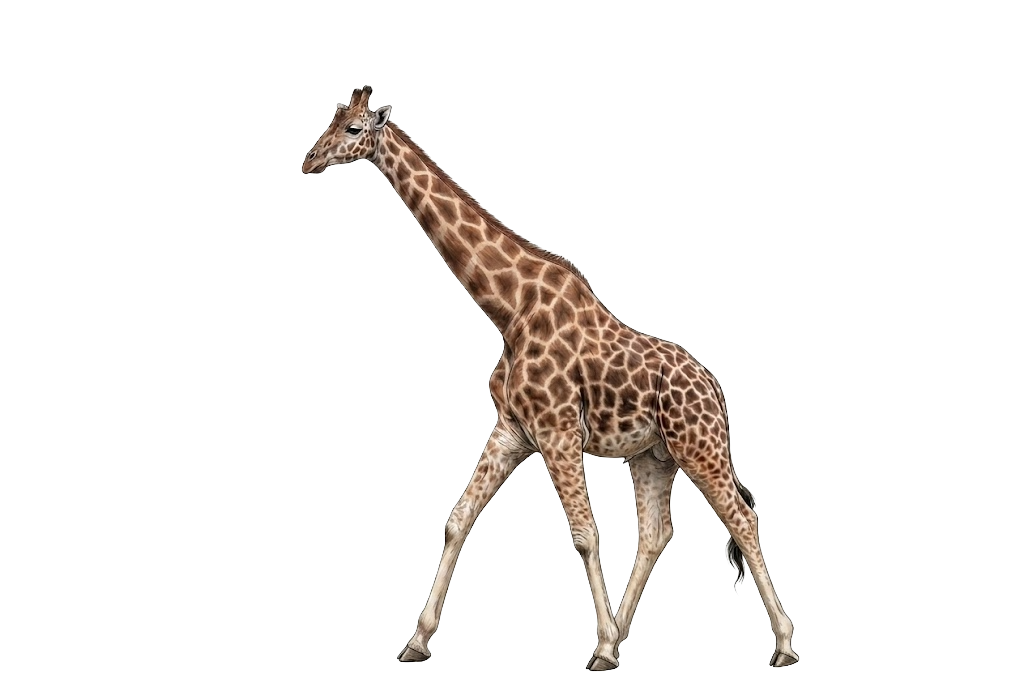
The first fossils of the fully modern, completely long-necked giraffe appear in East Africa, marking the completion of the second elongation boost — the caudal end of the vertebrae lengthened.
Giraffa camelopardalis (The Modern Era)
⏳ Complete Evolution Timeline
Evolutionary Epochs
The 24-million-year journey broken down into critical chapters of transformation.
Palaeomerycidae to Canthumeryx
Canthumeryx to Giraffokeryx
Giraffokeryx to Bohlinia
Bohlinia to Modern
Total Evolution
The Exact Ancestors
Helladotherium
23 Mya3 meters tall, antelope-like. Forefather of both modern giraffe AND okapi.
Canthumeryx
16 MyaEarliest known giraffid. Start of the giraffid family with slightly elongated neck vertebrae.
Samotherium
7 Mya~1 meter neck. First elongation boost (cranial end stretched). Crucial evolutionary link.
Bohlinia
7–9 MyaAlmost same size as modern giraffe. Direct ancestor of modern G. camelopardalis.
Comprehensive Chronology
Palaeomerycidae (family)
First ancestor; arose from gelocid ancestral assemblage
Canthumeryx
Primitive giraffid, slightly elongated neck bones, long tongue
Paleotragus
Short-necked, complete skin-covered horns
Giraffokeryx
Short-necked, thrived on low vegetation (India/Eurasia)
Samotherium
Short-necked transitional giraffe; Eurasia & Africa (Miocene–Pliocene)
Bohlinia
Terminal Climacoceratid genus; progeny entered China & India
True long-necked giraffes
First appearance of extended necks
Giraffa enters Africa
Via Ethiopia; radiated into multiple species
Giraffa extinction in Asia
Climate change caused Asian counterparts to die off
Neck elongation advances
Lineage further elongated neck vertebrae, enhancing reach
G. camelopardalis appears
First fossils of modern giraffe in East Africa
4 species (Masai, Northern, Reticulated, Southern)
5 subspecies; ~140,000 total remaining