
Evolution of the Horse
A 55-Million-Year Evolutionary Journey
Trace how climate shifts transformed Eohippus from a small forest dweller to the modern, single-toed Equus. Explore the comprehensive timeline, interactive skeletal changes, and biomechanical adaptations.
The Complete Timeline: From Eocene to Present
Scroll down to trace the evolutionary path. Click any photo card to open details, fossil reconstructions, and skeletal changes.
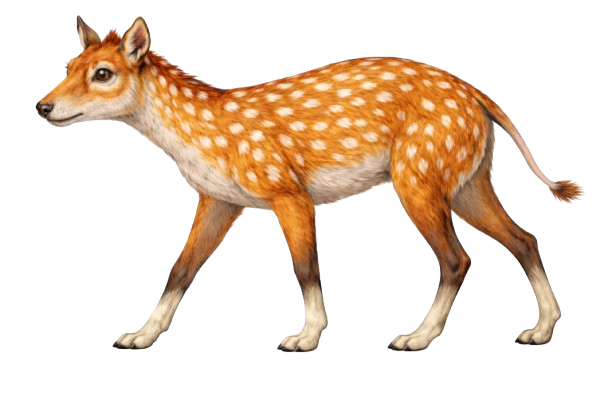
Hyracotherium (Eohippus)
Eohippus
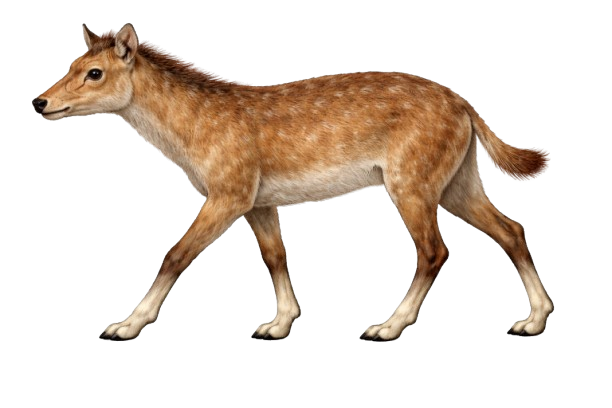
Orohippus
Early Eocene horse
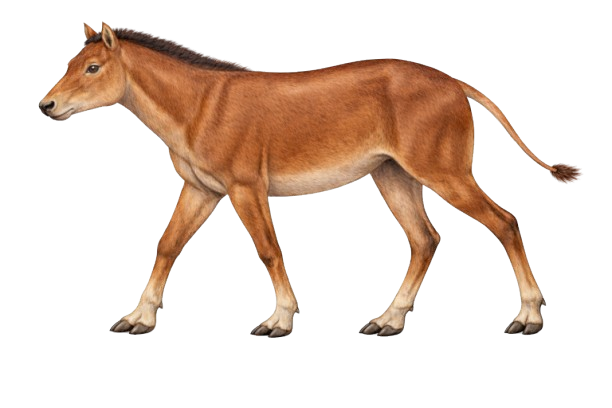
Mesohippus
Intermediate stage
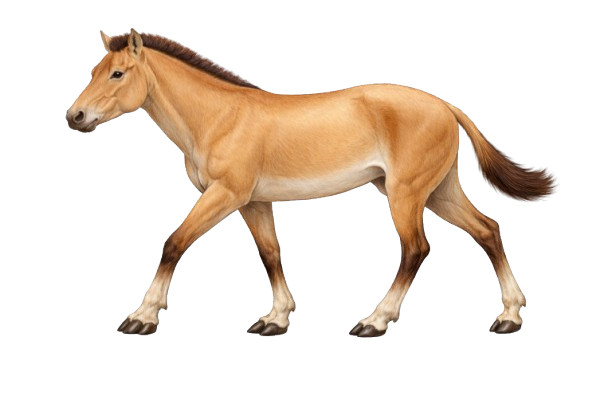
Miohippus
Advanced Mesohippus
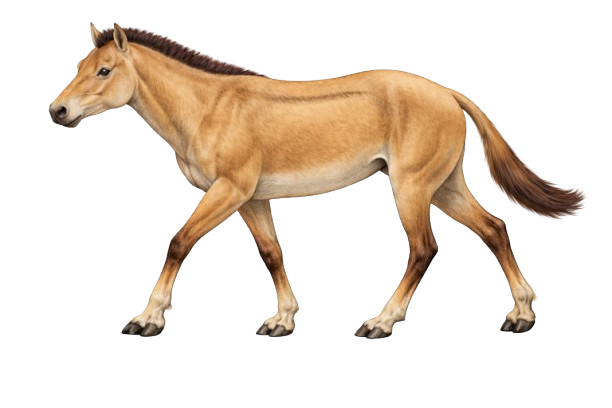
Parahippus
Early grazing horse
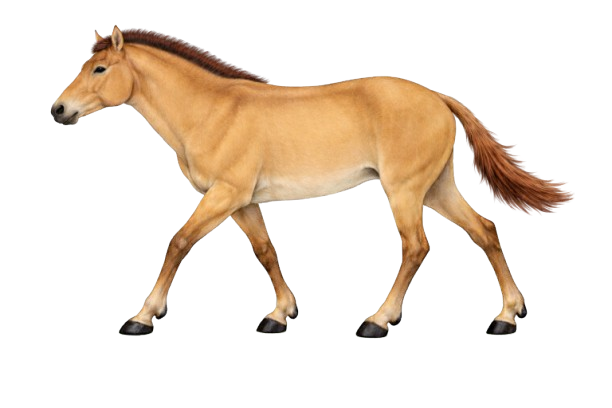
Callippus
Slender grazing horse
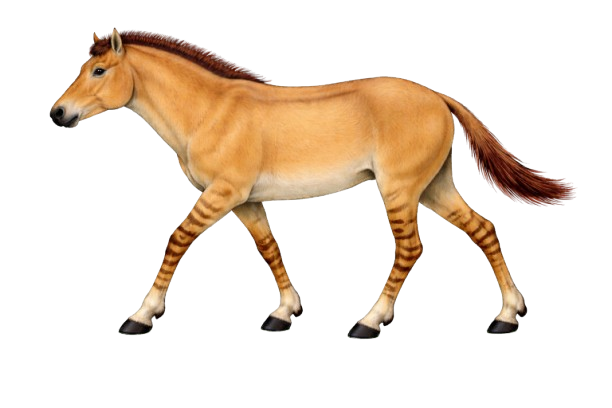
Merychippus
Ruminating horse
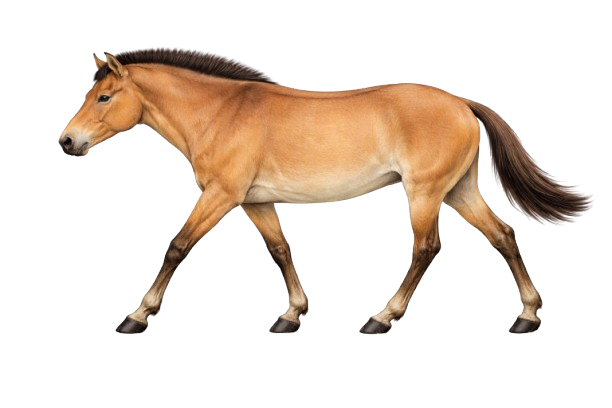
Pliohippus
Advanced one-toed horse
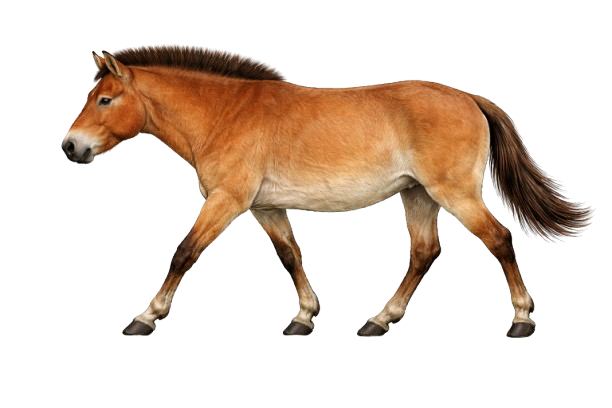
Equus
Equus caballus
Interactive Transformation: Forest to Plains
Use the interactive panel below to step through 55 million years of anatomy updates. Notice how climate shifts drove adaptations in feet, diet, and posture.
Anatomical Adaptations: Built for the Steppes
Environmental changes driven by plate tectonics forced horses to adapt or perish. Click each card below to explore how natural selection sculpted the modern horse.
The Single Hoof
Digit III DominanceThe Single Hoof
- Reduced from 4 digits to a single functional toe
- Saves energy by minimizing limb mass at the extremity
- Hoof made of keratin, acting as a natural shock absorber
- Allows for high-velocity running on hard soil
Hypsodont Teeth
High-Crowned MolarsHypsodont Teeth
- Extremely long crowns extending deep into the jaw
- Covered with a tough layer of cementum
- Slowly erupts as grinding surfaces wear down
- Specifically evolved to grind silica-rich, abrasive grasses
Cursorial Limbs
Specialized RunningCursorial Limbs
- Elongation of metacarpal/metatarsal bones
- Fusion of radius-ulna and tibia-fibula to prevent rotation
- Restricts limb movement to a single fore-and-aft plane
- Maximized stride length for cursorial locomotion
Size Progression
Fox to StallionSize Progression
- Overall body size increased dramatically over 55 million years
- Evolved from 40 cm tall (Eohippus) to 150+ cm (Equus)
- Larger size allows digestion of low-quality fibrous grasses
- Provides physical defense and stamina against open-field predators
Equidae Taxonomy: Branching of Modern Equids
Modern taxonomy classifies all living equids under a single genus, Equus. However, this genus is further divided into three distinct subgenera that separate true horses, zebras, and wild asses.
Family: Equidae
All Equine Ancestors & Relatives
Genus: Equus
Modern One-Toed Equids
Subgenus: Equus
True Horses
Subgenus: Asinus
Donkeys & Asses
Subgenus: Hippotigris
Zebras
Living Diversity: The Modern Equidae
Today, the Equidae family contains seven wild species (three zebras, three wild asses, and Przewalski's wild horse) along with the domestic horse and donkey. Together, they represent the survivors of a once vast evolutionary branch.


